
WATER HYGIENE MONITORING & MANAGEMENT
Completing a Legionella risk assessment is only the first stage of effective water hygiene management. Any identified control measures must then be implemented, monitored and reviewed to confirm that they continue to work effectively.
JD Environmental Solutions coordinates planned monitoring and management support through competent specialist providers. Programmes are tailored to your risk assessment, written control scheme, water systems and property requirements.
Routine Temperature Monitoring
Temperature monitoring provides an important indication of whether hot and cold-water systems are operating under conditions that adequately control bacterial growth.
Checks & Controls
Checks help identify problems such as poor water turnover, scale, sediment, corrosion, unsuitable temperatures or control measures that have not been completed.
Written Schemes and Management Support
written schemes provide a clear framework for managing risks.
ROUTINE TEMPERATURE MONITORING
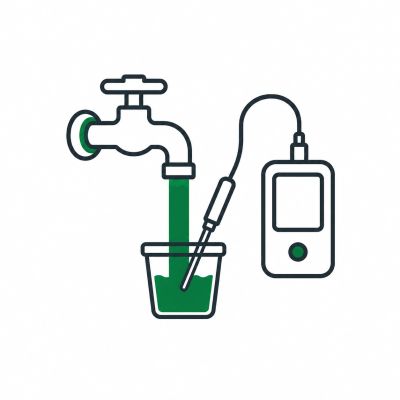
Temperature monitoring provides an important indication of whether hot and cold-water systems are operating under conditions that adequately control bacterial growth.
Depending on the system and its risk assessment, monitoring may include:
- Hot-water storage and return temperatures
- Sentinel and representative outlet temperatures
- Cold-water storage and distribution temperatures
- Thermostatic mixing valve outlet temperatures
- Remote temperature or outlet-usage monitoring where appropriate
Monitoring locations and frequencies are selected according to the water system and the risks it presents. Results are recorded clearly, with unexpected readings highlighted for investigation and appropriate follow-up.
SCHEDULED CHECKS & CONTROL ACTIVITIES
An effective water hygiene programme may also include flushing little-used outlets, inspecting cold-water storage tanks, checking water heaters & calorifiers, while monitoring the condition of showers, taps, flexible hoses and thermostatic mixing valves.
These checks help identify problems such as poor water turnover, scale, sediment, corrosion, unsuitable temperatures or control measures that have not been completed. Where an issue is identified, it is recorded and escalated so that further investigation, maintenance, sampling or remedial work can be arranged where necessary.
The precise programme will depend on the type of building, complexity of the water system, occupants and findings of the Legionella risk assessment.
WRITTEN SCHEMES, RECORDS & MANAGEMENT SUPPORT
Where Legionella risks require ongoing controls, a written scheme provides a clear framework for managing them. It should describe the water system, identify responsibilities, set out the required control measures and establish what checks must be completed.
Support can include preparing or reviewing written schemes, establishing monitoring schedules, maintaining logbooks, recording results and tracking outstanding actions. We can also help coordinate planned attendance across individual sites or larger property portfolios and provide clear summaries for those responsible for managing the programme.
This gives your appointed responsible person a structured record of what has been checked, when it was completed, the results obtained and any further action required.
REPORTING, REVIEW & FOLLOW-UP
Monitoring results should be reviewed to confirm that controls remain effective and to identify developing problems. Each attendance can be supported by clear records of the checks completed, results obtained and any recommendations arising from the visit.
Where controls are not performing as expected, the next step may involve additional monitoring, targeted Legionella sampling, a review of the existing risk assessment or the coordination of remedial works.
Regular review helps ensure that the programme remains suitable for the building, its occupants and the way the water system is being used.
.png/:/rs=w:400,cg:true,m)